Drought-Tolerant Landscaping Ideas for the Inland Northwest
Drought tolerant landscaping ideas for Spokane start with one fact: this region receives only about 17 inches of rain per year. Most of that falls outside the summer months, leaving yards to bake through July and August with little natural moisture. That’s not a problem, it’s an opportunity.
At Greenscape Landscaping, we’ve spent over 25 years helping Spokane homeowners and businesses build landscapes that look great without draining water resources. Below, we break down seven proven strategies, from plant selection to smart irrigation, that save water and create lasting curb appeal in the Inland Northwest.
Why Spokane’s Climate Is Ideal for Drought Tolerant Landscaping
Spokane’s dry-summer, low-humidity, four-season climate is practically built for drought tolerant landscaping. Cold winters harden plants. Hot summers with minimal rainfall favor species adapted to deep, infrequent watering. The result is a growing environment where water-wise plants don’t just survive, they outperform traditional turf and ornamentals.
Average summer highs reach the upper 80s and low 90s, and rain between June and September is scarce. Soils across many Spokane neighborhoods, from the South Hill to the Five Mile Prairie area, tend to be well-drained and volcanic in origin. These conditions match the native habitat of dozens of low-water perennials, grasses, and shrubs.
For property owners, this means a well-planned drought tolerant landscape can cut outdoor water use by 50% or more compared to a conventional lawn. That translates to lower utility bills, less maintenance, and a yard that stays green when your neighbor’s turf goes dormant.
Top Water-Wise Plants That Flourish in the Inland Northwest
Choosing the right water-wise plants is the single biggest factor in a successful drought tolerant landscape. WSU Extension and the SpokaneScape program both publish tested plant lists for this exact climate. We use those lists as a starting point on every project.
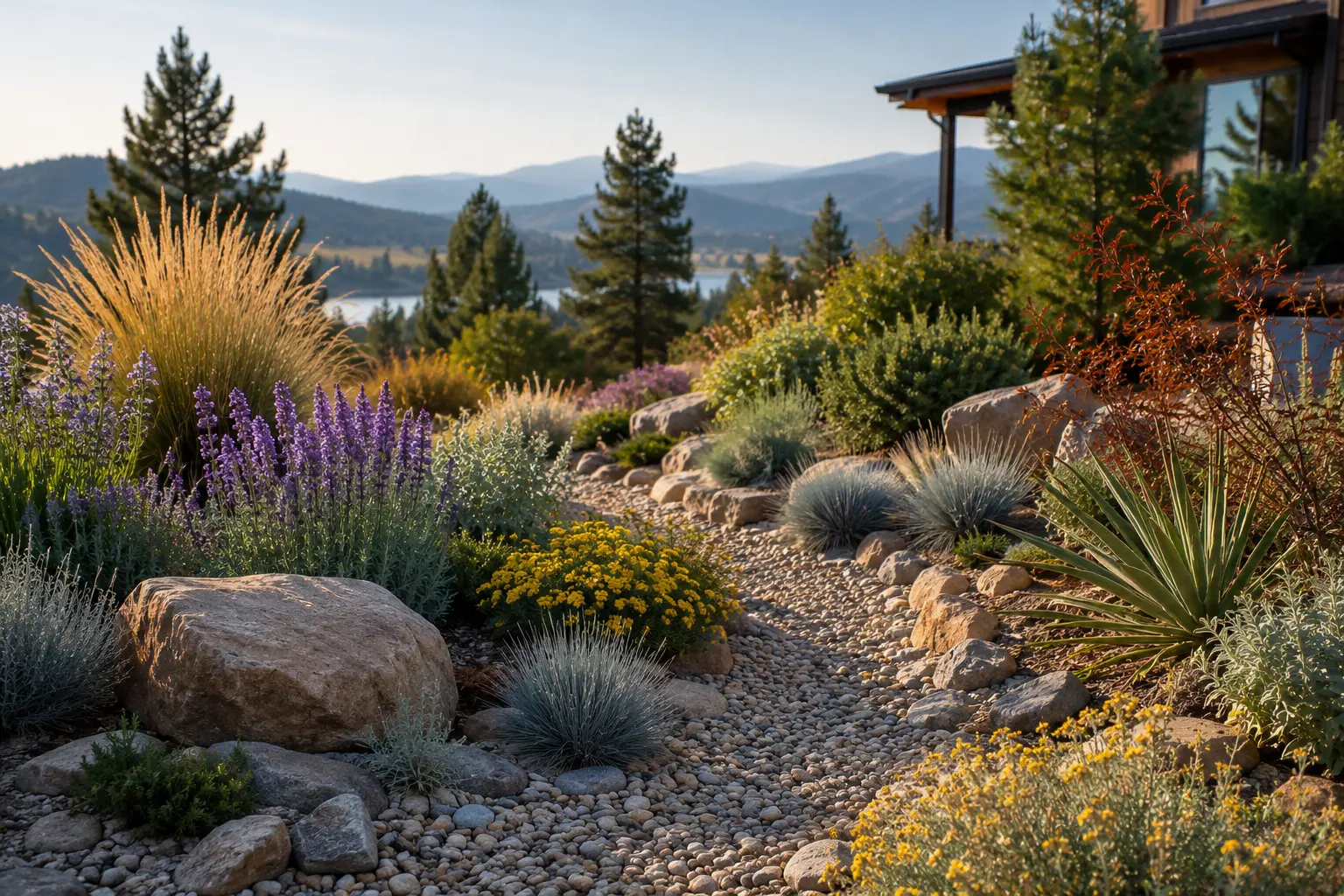
Strong performers in Spokane include blanket flower (Gaillardia), yarrow, Russian sage, coneflower, lavender, and sedum. For texture and movement, blue fescue, feather reed grass, and blue oat grass add height without heavy water demands. Groundcovers like creeping thyme, creeping phlox, and snow-in-summer fill gaps between beds and hardscape while keeping soil cool.
Native Perennials and Grasses
Inland Northwest natives give you the best return on every drop of water. They’ve adapted to this exact precipitation pattern over thousands of years, and they support local pollinators and wildlife.
We frequently install blanket flower, lupine, penstemon, and yarrow in residential beds. For larger commercial properties and slopes, bunchgrasses like Idaho fescue and bluebunch wheatgrass handle dry, well-drained sites with almost no supplemental irrigation once established.
Group native plants into low-water hydrozones. This keeps irrigation simple and prevents overwatering species that prefer drier conditions.
Drought Tolerant Shrubs and Trees
Shrubs and trees form the structural backbone of any drought tolerant landscape design. WSU recommends potentilla, spirea, dwarf ninebark, mugo pine, Oregon grape, and rabbitbrush for Spokane-area yards.
For shade and vertical interest, honeylocust, Kentucky coffeetree, and bur oak all tolerate summer heat and limited water. Native ponderosa pine works well on larger lots where it has room to spread. We’ve installed ponderosa pines on properties near Manito Park that now thrive with zero summer irrigation after a two-year establishment period.
Xeriscaping Design Principles for Spokane Yards
Xeriscaping in the Inland Northwest follows a few core principles. These aren’t abstract theories, they’re practical steps we apply on every drought tolerant project we design and install.
Analyze your site first. Evaluate soil type, slope, and microclimates. South- and west-facing areas absorb the most heat and lose moisture fastest. North- and east-facing sides stay cooler and retain water longer. Each zone needs a different plant palette.
Create hydrozones. Divide the yard into high-, moderate-, and low-water areas. Place thirstier plants near the house or in naturally moist spots. Push the toughest, lowest-water species to the yard’s edges and slopes.
Reduce lawn area. Traditional turf is the biggest water consumer in any Spokane landscape. Shrink the lawn to only the areas you actively use, a play space for kids or a gathering area. Replace the rest with native beds, gravel paths, or groundcover.
Plan for year-round interest. Include evergreen shrubs and structural plants so the landscape looks intentional in every season, not just summer. A well-designed xeriscape should look good under a January frost, too.
Hardscaping and Mulch Strategies to Reduce Water Use
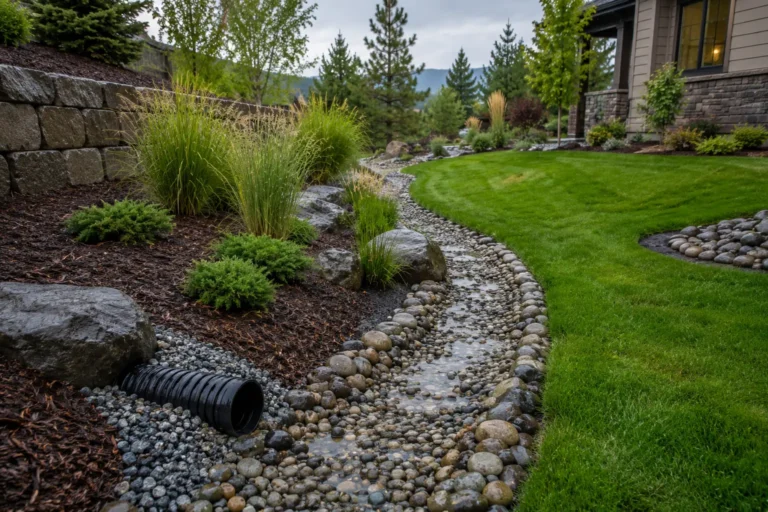
Hardscaping cuts your irrigated square footage while adding function and visual structure. We install patios, walkways, retaining walls, and gravel beds that complement drought tolerant plantings and reduce overall water demand.
Rock and gravel beds work especially well in Spokane’s climate. They absorb daytime heat and radiate it back to nearby plants in the evening, extending the growing season for heat-loving species like lavender and Russian sage.
Mulch is equally important. Apply 3 to 4 inches of organic mulch, wood chips, bark, or shredded leaves, around plantings. This layer reduces evaporation, suppresses weeds, and moderates soil temperature. Keep mulch a few inches away from stems and trunks to prevent rot.
For homeowners converting old lawn to drought tolerant beds, we often recommend sheet mulching. Layer cardboard over the existing turf, add compost, then top with 3 to 4 inches of mulch. Within a few months, the old grass breaks down and you have a ready-to-plant bed, no rototilling required.
Smart Irrigation Tips for a Water-Efficient Spokane Landscape
Even drought tolerant landscapes need water during establishment and occasional deep soaks during extreme heat. The key is delivering water efficiently.
Use drip irrigation or inline emitter tubing for shrub beds and perennial areas. Drip systems put water directly at the root zone, cutting waste from wind and evaporation. Avoid high-spray sprinkler heads in planting beds, they lose up to 30% of water to the air before it reaches the soil.
Water deeply and infrequently. Once plants are established, push water down to 18 to 48 inches of root depth. Shallow, frequent watering encourages weak surface roots. Deep watering builds plants that can handle extended dry periods on their own.
Separate irrigation zones by sun exposure and plant water needs. A shaded bed on the north side of your house doesn’t need the same schedule as a south-facing slope. Program each zone independently.
Irrigate in the early morning, between 4 and 8 AM, when wind is calm and evaporation is lowest. Adjust your schedule seasonally and water only when the top inch of soil feels dry. Our team at Greenscape installs and programs smart irrigation systems that automate these adjustments, saving our clients time and money.