Lawn Care in Spokane: A Seasonal Guide to a Healthier, Greener Yard in 2026
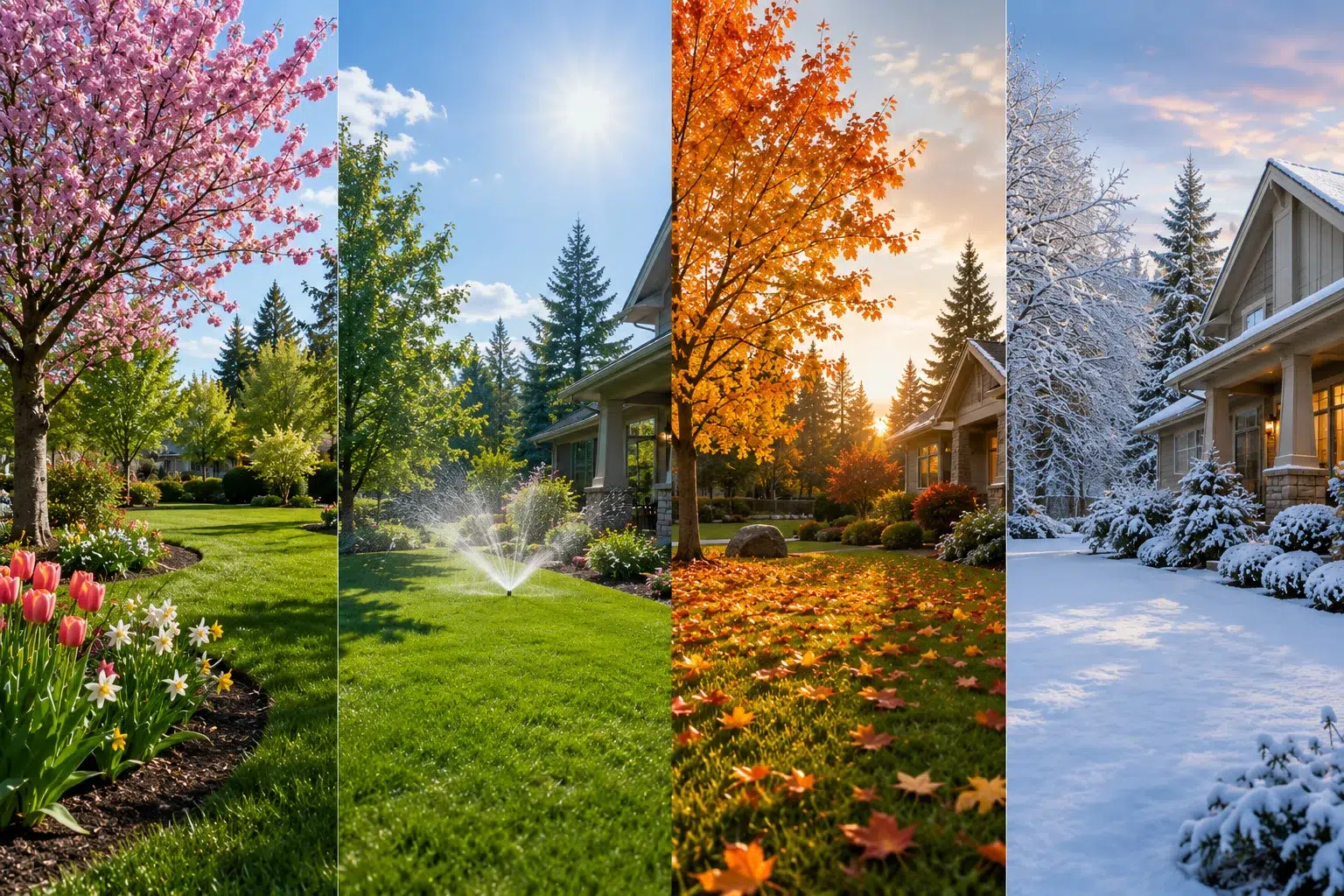
Lawn care in Spokane requires a different playbook than most cities. With only about 17 inches of annual rainfall, cold winters that drop well below freezing, and summers that regularly push past 90°F, your grass faces real challenges from January through December.
At Greenscape Landscaping, we’ve spent more than 25 years helping homeowners and businesses across the Spokane area grow healthier, stronger lawns, season after season. This guide breaks down exactly what your lawn needs and when it needs it, based on the conditions we see right here in the Inland Northwest.
Why Spokane’s Climate Demands a Unique Lawn Care Approach
Spokane sits at the transition between a humid continental and semi-arid steppe climate. That means we get real winters with snow and hard freezes, followed by hot summers with very little rain. Most of the precipitation falls between October and March, leaving lawns to survive a pronounced dry period from late June through September.
The soils add another layer of difficulty. Properties on the South Hill and Five Mile tend toward sandy, rocky ground that drains fast and holds little moisture. Areas closer to the valley floor often have heavier silt and clay. Both soil types are frequently low in organic matter, which limits root development and nutrient availability.
Freeze-thaw cycles in late winter and early spring stress root systems. Summer temperature swings, 95°F days followed by 55°F nights, push cool-season grasses like Kentucky bluegrass, perennial ryegrass, and tall fescue to their limits. The result: Spokane lawns need drought-tolerant grass varieties, deep root systems, careful irrigation scheduling, and fertilization adjusted to each season. A one-size-fits-all lawn care program simply doesn’t work here.
Essential Spring Lawn Care Tasks to Start the Season Right
Spring lawn care begins once the soil thaws and daytime temperatures hold above 50°F consistently, usually late March to mid-April in Spokane.
Start with a thorough raking to clear leftover leaves and break up any matted thatch. Inspect the lawn for snow mold patches, which are common after heavy snow cover. These gray or pink circular spots often recover on their own with raking and air circulation, but severe cases may need overseeding.
Core aeration is one of the most valuable spring tasks, especially on compacted or high-traffic areas. Pulling small soil plugs opens up the root zone for air, water, and nutrients. We recommend this for any lawn that feels hard underfoot or pools water after rain.
Overseed thin or bare spots with a cool-season blend suited to the Inland Northwest. Apply a pre-emergent crabgrass control before soil temperatures reach 55°F, typically by mid-April. Timing matters here. Apply too late and crabgrass seeds germinate before the barrier is in place.
Spot-treat broadleaf weeds like dandelions with a selective herbicide rather than blanket-spraying the entire lawn.
Finish with a balanced fertilizer application based on a soil test.
Summer Lawn Care: Battling Heat and Drought Stress in the Inland Northwest
Summer lawn care in Spokane is all about water management and stress reduction. July and August bring the highest temperatures and the least rainfall, which creates prime conditions for drought stress.
Raise your mowing height to 3–3.5 inches. Taller grass blades shade the soil, slow evaporation, and encourage deeper root growth. Never remove more than one-third of the blade in a single mow.
Water deeply but less often. Most Spokane lawns need about 1–1.5 inches of water per week, including any rainfall. Water early in the morning, before 8 a.m., to reduce evaporation and give blades time to dry before evening. Wet grass overnight invites fungal disease.
During extended heat waves or water restrictions, it’s okay to let the lawn go partially dormant. Cool-season grasses can survive several weeks of dormancy and green up again once moisture returns. Avoid heavy foot traffic on dormant turf.
Watch for signs of insect damage from billbugs and chinch bugs, which thrive in hot, dry conditions. Pull back a section of sod near damaged areas to check for larvae. Treat only if pest numbers exceed recommended thresholds. Skip heavy fertilization during peak heat, it forces top growth the roots can’t support.
Fall and Winter Prep for a Stronger Lawn Year-Round
Fall is the most important season for building a resilient Spokane lawn. Cool temperatures and returning moisture create ideal conditions for root development and seed establishment.
Apply a balanced fertilizer in early September, then follow up with a late-fall “winterizer” application higher in nitrogen, typically in late October or early November. This feeds the root system through winter and gives the lawn a head start in spring.
Early fall is also the best window for overseeding. Seed-to-soil contact, moderate temperatures, and consistent moisture give new grass the highest germination rates of the year.
Continue mowing until growth stops, usually by late October. Drop the final mow height to about 2.5 inches. Shorter grass going into winter reduces the risk of snow mold, which develops under matted, tall turf.
Rake leaves before the first heavy snow. Drain and blow out your irrigation system before overnight temperatures drop below 32°F consistently, a burst pipe or cracked valve head is an expensive fix. Avoid walking on frozen or saturated turf, as compacted frozen grass is slow to recover in spring.
Watering, Irrigation, and Smart Water Management for Spokane Lawns
Efficient watering separates a thriving Spokane lawn from a struggling one. With limited summer rainfall, your irrigation system does most of the heavy lifting from June through September.
Adjust your watering schedule based on soil type and slope. Sandy soils on the South Hill drain quickly and may need shorter, more frequent cycles. Clay-heavy soils absorb water slowly and benefit from a cycle-and-soak approach, running the sprinklers for 5–10 minutes, pausing for 30 minutes, then running again. This prevents runoff and gets water down to the root zone.
Calibrate your sprinklers at least once per season using catch cans (or even empty tuna cans placed around the yard). Measure how long it takes to deliver a half-inch of water, then set your timer accordingly. Fix any leaks, broken heads, or overspray onto sidewalks and driveways.
Smart controllers and rain sensors save water and money. These devices adjust run times based on weather data, so you’re not watering during or right after a rainstorm. Follow any Spokane-area watering restrictions when they’re in effect. Our crews stay current on local guidelines and can help you set a compliant schedule.
Common Lawn Problems in Spokane and How to Fix Them
Thatch and compaction build up over time, especially in high-traffic yards. Annual core aeration combined with a thin layer of compost topdressing improves drainage and feeds soil biology.
Snow mold appears as circular gray or pink patches after snowmelt. Prevention is the best approach: mow shorter before winter, rake leaves, and avoid piling snow on the lawn. Light raking in spring usually clears mild cases.
Drought stress shows up as blue-gray discoloration and footprints that don’t spring back. Raise mowing height and adjust irrigation before the lawn goes fully dormant.
Weeds, dandelions, clover, and crabgrass are the most common in Spokane. A thick, healthy lawn is your best defense. Pre-emergent herbicides in spring stop crabgrass. Post-emergent spot treatments handle broadleaf weeds without damaging surrounding grass.
Insects like billbugs and chinch bugs cause irregular brown patches that don’t respond to watering. Inspect the thatch layer for larvae. Use labeled insecticides only when pest counts warrant treatment.
Disease including leaf spot, rust, and dollar spot tends to appear during humid stretches or when lawns are watered in the evening. Improve air circulation, water in the morning, and apply fungicides only when cultural changes aren’t enough.
When to Hire a Professional Lawn Care Service in Spokane
Some lawn care tasks are straightforward enough to handle yourself. Others require equipment, products, or expertise that make professional help the smarter choice.
Consider hiring a lawn care service if you’re dealing with persistent problems, recurring disease, insect infestations, or weed issues that don’t respond to over-the-counter products. Professional-grade applications are more effective and correctly calibrated to avoid damaging your lawn or the environment.
Specialized services like core aeration, power raking, irrigation design and repair, tree and shrub care, and deep-root fertilization require equipment most homeowners don’t own. A licensed, experienced crew completes these tasks faster and with better results.
Time and physical limitations are valid reasons, too. A regular maintenance schedule keeps your property looking sharp without eating up your weekends.
At Greenscape Landscaping, we’ve provided lawn care in Spokane for over 25 years. We’re licensed, bonded, and insured, and our crews know the local soil, climate, and grass types inside and out. From weekly mowing and fertilization programs to full irrigation system installs, we build seasonal plans around what Spokane lawns actually need, not a generic national template.