

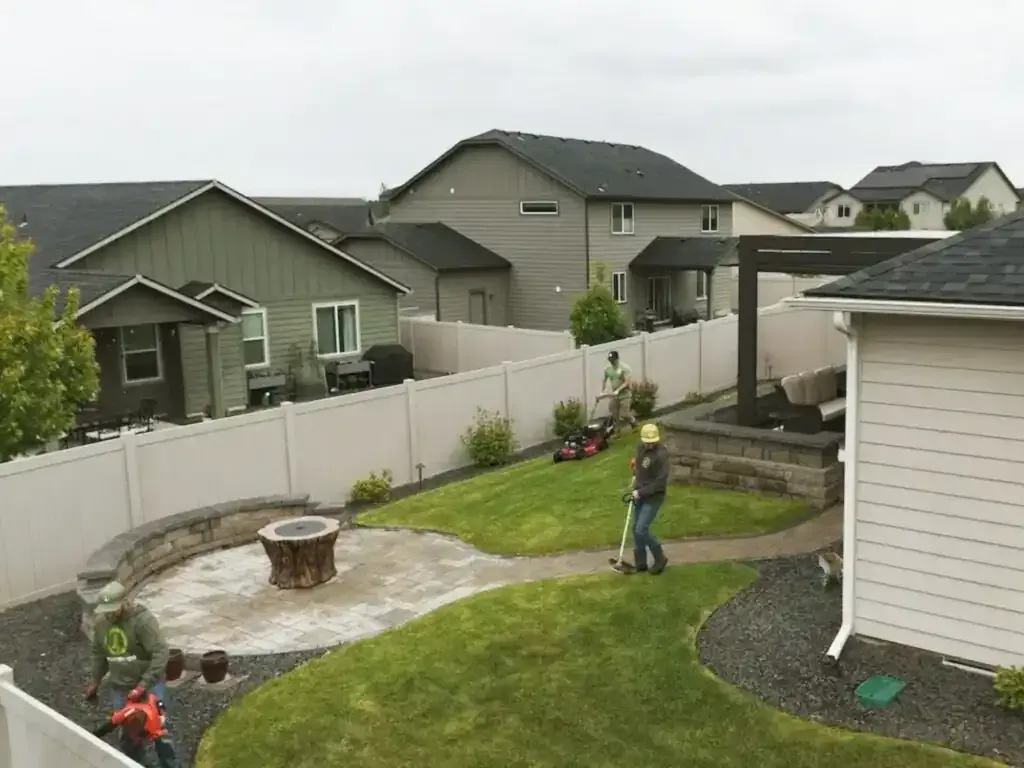
Hiring retaining wall contractors in Spokane starts with understanding your property's specific needs. Slopes, erosion, and unstable soil are common across the region, and the wrong wall or the wrong builder can turn a structural investment into an expensive repair. At Greenscape Landscaping, we've spent more than 25 years building retaining walls for Spokane homeowners and commercial property owners. This guide breaks down wall types, costs, contractor red flags, and the questions you should ask before any work begins.
Why Spokane Properties Often Need Retaining Walls
Much of Spokane sits on hilly terrain with variable soil types, from sandy loam near the river valleys to dense clay on the South Hill. That uneven ground creates real problems: soil slides downhill during heavy rain, flat usable yard space disappears, and foundations can shift over time without proper support.
A retaining wall holds soil in place and creates level areas where the natural grade won't cooperate. Homeowners on streets near Manito Park, the Cliff/Cannon neighborhood, and properties along the bluffs above the Spokane River deal with these slope challenges regularly.
Retaining walls also serve a functional role in larger landscaping and hardscaping projects. If you want a patio, firepit area, or expanded driveway on a sloped lot, a properly built retaining wall creates the flat surface you need. For commercial properties, retaining walls manage stormwater flow and protect parking areas, walkways, and building foundations from erosion damage.
Types of Retaining Walls Best Suited for Spokane's Climate and Terrain
Not every retaining wall material works well in Spokane's freeze-thaw climate. Winter temperatures regularly dip below freezing, and spring thaw brings heavy moisture. The wall material and drainage system need to handle both.
Segmental concrete block walls are the most common choice for residential projects. These interlocking blocks resist frost heave, drain well when installed with proper backfill, and come in a range of colors and textures.
Boulder retaining walls use large natural rocks stacked to hold back slopes. They work well on properties where a natural look matters. Boulder walls perform best on moderate slopes and require skilled placement to stay stable.
Natural stone walls offer a more refined appearance. They're a good fit for front-yard projects or garden terracing where aesthetics matter as much as function.
Poured concrete walls handle heavy loads and tall grade changes. They're common in commercial retaining wall projects or where structural engineering calls for maximum strength.
Every type needs a drainage system behind the wall, typically perforated pipe and gravel backfill, to prevent water pressure from pushing the wall forward over time. We always include drainage as a standard part of our retaining wall installations.
What to Look for When Hiring a Retaining Wall Contractor
A retaining wall is a structural project, not just a decorative one. The contractor you choose needs specific experience building walls that handle lateral soil pressure, water drainage, and Spokane's freeze-thaw cycles.
Start by checking credentials. Any retaining wall contractor working in Washington State should carry a valid contractor's license, general liability insurance, and a bond. Ask to see proof, a reputable company will provide it without hesitation.
Look at their project portfolio. Have they built walls similar in size, material, and complexity to what your property requires? Ask for references from past clients, and check their BBB rating and online reviews.
Local experience matters. A contractor who has worked extensively in Spokane understands the soil conditions, permit requirements, and drainage challenges specific to this area. That knowledge prevents costly mistakes.
Permits, Drainage, and Engineering: What Spokane Projects Require
Spokane County and the City of Spokane both require building permits for retaining walls that exceed four feet in height (measured from the base of the footing to the top of the wall). Walls that carry additional loads, like a driveway or building above, may require permits regardless of height.
Engineering is another factor. Walls over four feet typically need a licensed engineer's design and stamp. This adds cost upfront but protects you from structural failure down the road.
Drainage is non-negotiable. Water buildup behind a retaining wall is the number one cause of wall failure. A qualified retaining wall contractor will install a drainage system, gravel backfill, filter fabric, and perforated drain pipe, as part of every project.
How Much Does a Retaining Wall Cost in Spokane?
Retaining wall costs in Spokane vary based on several factors, and no single price applies across all projects. The main variables include:
- Wall height and length, Taller, longer walls require more material, labor, and often engineering.
- Material choice, Segmental block is generally mid-range. Natural stone and poured concrete cost more. Boulder walls vary depending on local stone availability.
- Site access, Tight lots, steep grades, or limited equipment access increase labor time.
- Drainage and backfill, These are essential, not optional add-ons.
- Permits and engineering, Required for taller or load-bearing walls.
As a rough guide, most residential retaining walls in our area range from $35 to $75 per square face foot installed, depending on the factors above. A small garden wall might cost a few thousand dollars. A large structural wall with engineering can run $15,000 or more.
We provide free on-site estimates so you get an accurate number based on your property's actual conditions, not a generic quote.
Questions to Ask Before Signing a Retaining Wall Contract
Before you commit to any retaining wall contractor, ask these questions and get clear answers:
Are you licensed, bonded, and insured in Washington State? This protects you from liability if something goes wrong during construction.
What materials will you use, and why? The contractor should explain their material recommendation based on your site, not just default to the cheapest option.
Is drainage included in the price? If a contractor doesn't mention drainage, that's a red flag. Every retaining wall needs it.
Will you handle permits and engineering? A good contractor manages this process for you, including coordinating with engineers when required.
What is the project timeline? You should know start and completion dates before signing anything.
Is the warranty in writing? Verbal promises don't hold up. Get material and workmanship warranties documented in your contract.
What exactly is included in the total price? Confirm whether demolition, grading, backfill, drainage, and cleanup are part of the bid or billed separately.
How Greenscape Landscaping Approaches Retaining Wall Installation
At Greenscape Landscaping, we've built retaining walls across Spokane for residential and commercial clients for over 25 years. We handle every phase, site evaluation, material selection, drainage design, permit coordination, and construction.
We start each project with an on-site assessment. We evaluate the slope, soil type, water flow patterns, and any structures near the proposed wall. This information drives our material and design recommendations.
Our crews install drainage systems on every retaining wall we build. We use compacted gravel backfill, filter fabric, and perforated pipe to keep water pressure from compromising the wall's integrity.
We're licensed, bonded, and insured in Washington State. We coordinate permits and engineering when your project requires them, so you don't have to manage that process yourself.
If you need a retaining wall contractor in Spokane you can trust, contact Greenscape Landscaping for a free estimate.