Drainage Solutions for Spokane Yards: French Drains, Swales & Grading
Drainage solutions in Spokane are a top concern for property owners dealing with pooling water, soggy lawns, and foundation damage. The combination of clay-heavy soils, seasonal snowmelt, and heavy spring rains creates persistent water problems across residential and commercial properties. At Greenscape Landscaping, we’ve spent more than 25 years helping Spokane homeowners and businesses solve these exact issues. This guide breaks down why drainage problems happen here, how to spot them early, and which fixes actually work for our local conditions.
Why Poor Drainage Is a Common Problem for Spokane Properties
Spokane sits on a mix of clay and compacted soils that drain slowly. When snowmelt and spring rain hit these soils, water pools instead of absorbing. That’s the core of most drainage problems we see across the region.
Sloped yards make things worse. Many properties in neighborhoods like the South Hill and Five Mile Prairie have grades that direct water toward foundations rather than away from them. Once water reaches your home’s base, it finds every crack and gap.
Development adds another layer. Driveways, patios, and walkways create hard surfaces that shed water instead of absorbing it. Older neighborhoods with aging storm infrastructure often can’t keep up during peak runoff events. We regularly visit properties where the original grading has settled over the years, creating new low spots that trap standing water in the yard after every storm.
Signs Your Yard Needs Better Drainage
Standing water that lasts more than 24 hours after rain or snowmelt is the clearest red flag. If you walk outside the morning after a storm and see puddles that weren’t there a year ago, your drainage has shifted.
Watch for water pooling near your foundation. Wet basements, damp crawlspaces, and mold or mildew smells all point to water that’s not moving away from your home fast enough. Cracks in foundation walls and heaving hardscapes are signs of long-term moisture pressure.
Your lawn tells a story too. Persistently soggy patches, dead grass in low spots, and visible erosion channels across your yard mean water is flowing where it shouldn’t. These problems don’t fix themselves, they get worse each season.
French Drains: Spokane’s Most Reliable Drainage Fix
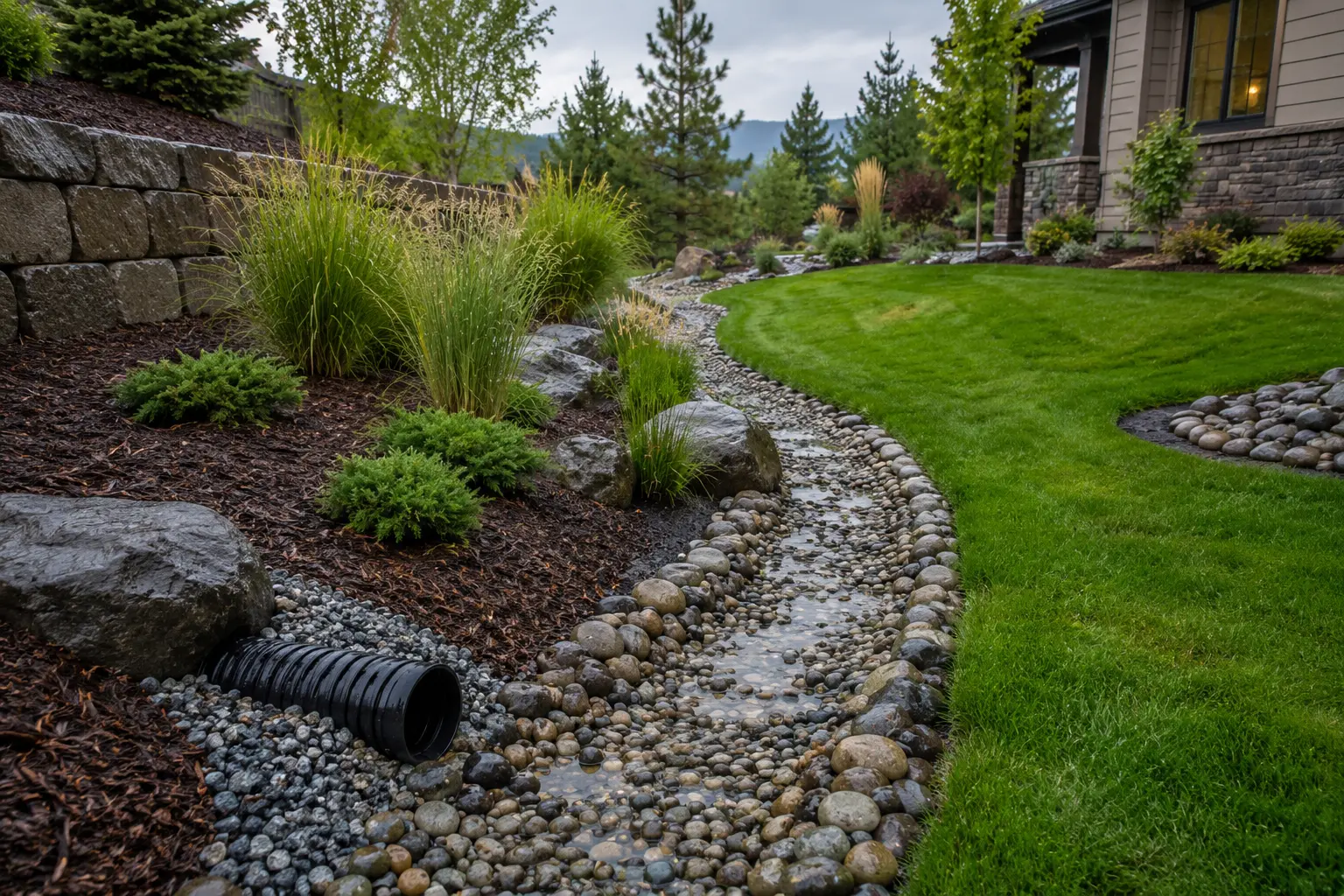
A French drain is a perforated pipe set inside a gravel-filled trench. It intercepts groundwater and redirects it away from problem areas to a safe discharge point. We install more French drains in Spokane than any other single drainage solution because they work consistently across our soil types.
French drains handle saturated lawns, water collecting along foundations, hillside seepage, and persistent low-spot flooding. They’re effective because they work below the surface, capturing water before it reaches your home or pools in your yard.
Proper installation matters. The trench needs correct slope, typically 1% grade minimum, appropriate pipe diameter, and a legitimate outlet. A French drain in Spokane that dumps into a dead-end or lacks adequate gravel bedding will fail within a few seasons. Our crews test soil percolation rates and map water flow paths before we dig a single trench. That upfront work is what separates a lasting fix from a temporary one.
Other Proven Drainage Solutions for Standing Water in Your Yard
French drains aren’t always the right answer. Depending on your property, one or more of these alternatives may solve standing water in your yard more effectively.
Regrading and reshaping adjusts the slope of your yard so water flows away from structures. This is often the first step we recommend for properties with subtle grade issues.
Downspout extensions and underground downspout drains move roof runoff away from your foundation. Many homes we visit in Spokane have downspouts that dump water right at the base of the house, a simple extension can make a big difference.
Dry wells and drain basins collect water in low areas and allow it to slowly infiltrate into the ground. These pair well with French drains on larger properties.
Sump pumps serve basements and crawlspaces where water intrusion is already happening. They’re reactive, not preventive, but necessary in some situations.
Permeable pavers and rain gardens increase absorption across hard surfaces. We install permeable paver systems that let water pass through instead of running off, a smart long-term drainage solution for patios and walkways.
How Spokane’s Climate and Soil Affect Your Drainage Plan
Spokane’s freeze-thaw cycle puts unique stress on drainage systems. Pipes and trenches need to account for ground movement during winter. A system that works in July might crack or shift by February if it isn’t installed at the right depth.
Snowmelt is often the biggest water event of the year here, bigger than any single rainstorm. Your drainage plan has to handle peak volume during spring thaw, not just a moderate summer rain. We size our systems for worst-case scenarios based on local precipitation data.
Soil percolation testing tells us how fast water moves through your specific soil. Some Spokane properties have surprisingly sandy pockets where dry wells work great. Others sit on tight clay where French drains with proper discharge are the only reliable option. We test before we recommend, that’s how we avoid installing solutions that underperform within a year.
DIY vs. Professional Drainage Installation: What to Consider
Some drainage fixes are reasonable DIY projects. Extending a downspout, building a small surface swale, or regrading a minor low spot can be done with basic tools and a weekend.
Professional installation makes sense for French drains, dry wells, sump pump systems, and any project involving significant regrading. If you’re seeing foundation cracks, chronic basement moisture, or standing water that covers large areas, the stakes are too high for guesswork.
A professional drainage contractor brings site analysis, soil testing, hydraulic sizing, and knowledge of local permit requirements. At Greenscape, we also coordinate drainage work with existing irrigation systems, retaining walls, and landscape features, something that’s easy to overlook in a DIY project. Getting the slope, pipe size, or outlet wrong on a French drain means digging it all up and starting over.
How to Get Started With a Drainage Assessment
Start by documenting the problem. Take photos during and after rainstorms. Note how long water sits in each area. This information helps us pinpoint the cause faster during a site visit.
Before calling a contractor, check the basics yourself. Clean your gutters, inspect downspouts for clogs, and look at any existing drain grates for debris. Sometimes a blocked downspout is the entire problem.
When you’re ready for a professional assessment, we walk your property, ideally during or right after rainfall, to see water behavior in real time. We check soil percolation, evaluate slope and grade, review existing systems, and provide recommendations with clear budget ranges. No guesswork, no generic quotes.
Greenscape Landscaping has been solving drainage problems across Spokane for over 25 years. Contact our team to schedule a drainage assessment and get a plan that fits your property and your budget.